What this page answers
- What to do first if you smell gas
- When gas work is required to be licensed and permitted
- How gas leaks are located and repaired
- What's involved in a new gas line for an appliance
- How to verify the line is safe after repair
About gas line repair
Gas line service covers repair of leaks in existing gas piping, installation of new gas lines to appliances, sizing and pressure testing of gas systems, and repair of failed shutoff valves or fittings. In California, gas line work must be done by a licensed contractor — it is not a DIY category under any circumstance.
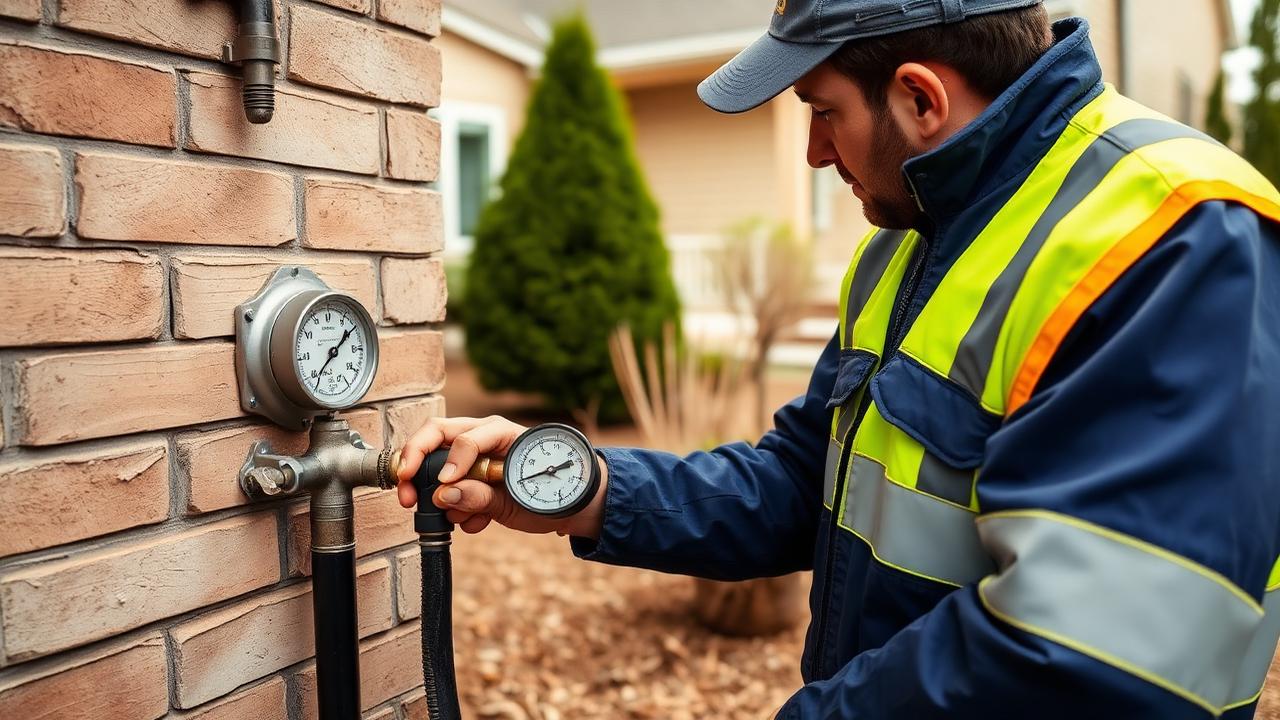
A proper gas repair or install always ends with a pressure test at the correct psi for the required duration, and — where applicable — with a permit and jurisdictional inspection. That's how the line is verified tight and safe to return to service.
Common signs you need gas line repair
- Rotten-egg or sulfur smell inside or near the house
- Hissing sound near a gas appliance, meter, or line
- Dead vegetation in a line along a buried gas line's path
- Higher than normal gas bill without change in usage
- Pilot light on a gas appliance won't stay lit
- Soot or discoloration around a gas appliance vent
- Gas appliance not getting enough gas at full demand
- Visible corrosion on exposed exterior gas piping
When should you call a plumber?
If you smell gas, call PG&E or 911 first, not a plumber. Utility response is the correct first step for any suspected active leak. Once the utility has cleared the site, call us to handle the licensed repair.
For planned work — a new range hookup, dryer conversion, water heater fuel connection, or outdoor grill line — call to schedule. We size the line for the appliance load and permit the work correctly.
What happens during a service visit?
For a suspected leak, we locate the source precisely using detection tools, controlled pressure tests, and inspection at every fitting and joint. Once located, we shut off the appropriate section, complete the repair with correct materials, and pressure-test the line before returning it to service.
For a new install, we plan the routing, size the pipe for the total connected load, permit the work, install to code, pressure-test, and coordinate the inspection.
What we check on-site
✓ CA Lic #1087742The diagnostic steps a licensed plumber takes before scoping any gas line repair work.
- 1Type of gas (natural / propane) and system pressure class
- 2Location and condition of the main shutoff valve
- 3Every accessible joint and fitting on the affected line
- 4Total connected appliance load vs. pipe sizing
- 5Signs of corrosion or physical damage on exposed piping
- 6Appliance connectors and shutoff valves at each point of use
- 7Pressure test result — documented psi and hold duration
- 8Permit and inspection requirements for the jurisdiction
- CA Lic #1087742
- Licensed & Insured
- 20+ Years Trade Experience
- Residential & Commercial
- 24/7 Emergency Service
Local context — San Jose & Santa Clara County
Most homes in San Jose are served by PG&E natural gas. In older neighborhoods, original black iron gas piping is still in service — usually functional, but at higher risk of corrosion at exterior runs. Newer construction may use CSST (corrugated stainless steel tubing) with specific bonding requirements.
Any Bay Area work involving new gas line installation should also consider whether an all-electric or heat-pump alternative fits the project. We're happy to walk through that decision honestly, especially for water heater replacements.
Plumbing Terms Explained
- Gas line
- Any piping — black iron, CSST, or copper (in specific applications) — carrying natural gas or propane from the meter to appliances.
- Gas shutoff valve
- An isolation valve at the meter (the main) and at each appliance. Every homeowner should know where the main gas shutoff is.
- Gas leak detection
- The process of locating a gas leak using a combination of electronic detection tools, soap testing at fittings, and controlled pressure testing.
- Pressure test
- A controlled pressurization of the gas line at a specified psi for a specified time to verify the system is tight before returning to service.
Homeowner guidance
Questions to ask
- What was the exact source of the leak, and how did you verify?
- What pressure and duration was the line tested at?
- Is this a permitted install and will there be an inspection?
What affects the job
- System pressure and gas type
- Access to the line and the appliance
- Whether existing piping is sized for added load
Don't attempt yourself
- Any DIY gas line repair — this is not a homeowner category
- Turning gas back on yourself after a leak or utility shutoff
- Testing for leaks with an open flame — ever