
What this page answers
- How to tell a sewer issue from a drain issue
- What a camera inspection actually shows
- Common sewer failures in older San Jose homes
- When spot repair works vs. when to replace the lateral
- Whether trenchless repair is an option for your line
About sewer line repair
Your sewer lateral is the pipe running from the house to the city sewer main in the street. It's usually the homeowner's responsibility all the way to the city connection. When it fails, wastewater can't leave the house cleanly — you see multiple slow drains, gurgling toilets, sewage surfacing at low fixtures, or wet spots in the yard along the line's path.
Sewer repair work ranges from clearing root intrusion at a cleanout, to excavating and replacing a damaged section, to full lateral replacement — or trenchless lining/bursting where the pipe condition and access allow.
Common signs you need sewer line repair
- Multiple fixtures backing up at once
- Sewage surfacing in a tub, shower, or floor drain
- Toilets gurgling when other fixtures drain
- Slow drains that return within days of clearing
- Wet or unusually green patches along the yard's sewer line path
- Foul sewer smell outside near the cleanout or yard
- Water in the crawl space with a sewage odor
- Backups worse during rain (indicates lateral cracks letting in groundwater)
When should you call a plumber?
Call as soon as you see sewage anywhere it shouldn't be, or if you're clearing the same main line more than once or twice a year. Repeat clearings are a sign of a physical problem in the pipe — snaking treats the symptom, not the cause.
For older San Jose homes, we recommend a baseline camera inspection at purchase or after the first main-line clog. It's the cheapest way to know what you actually own underground.
What happens during a service visit?
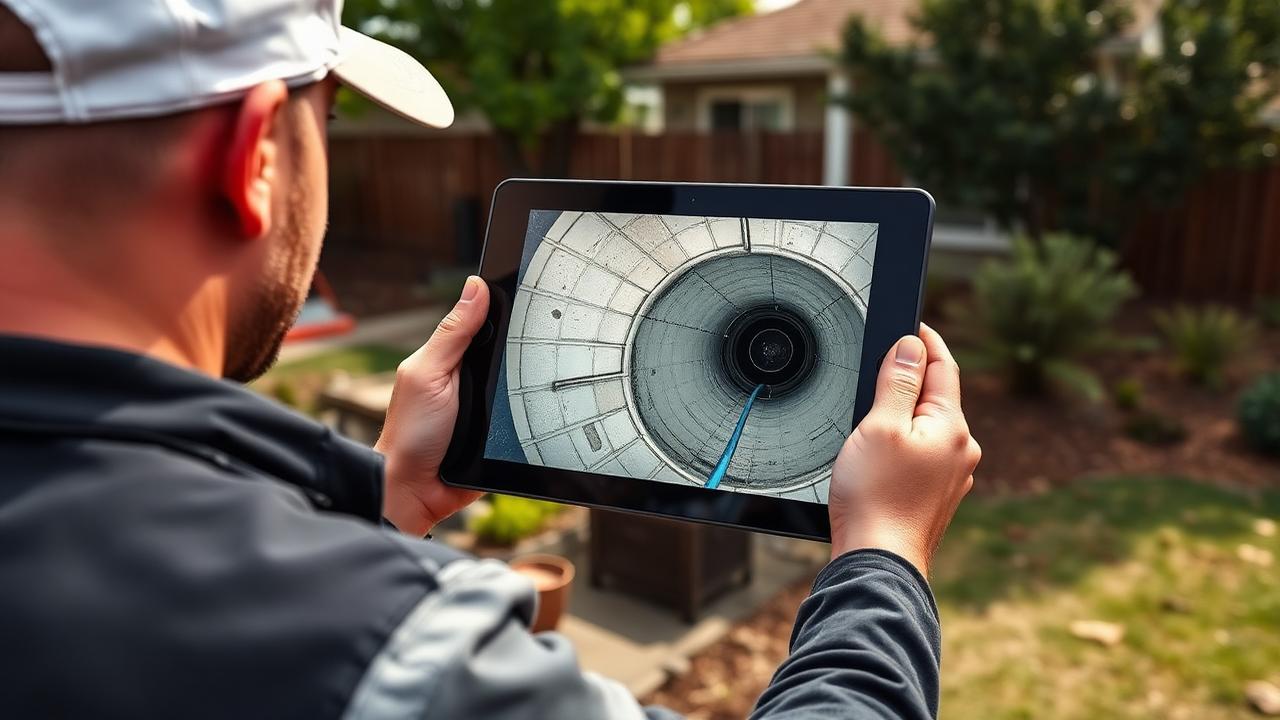
We start with a main-line clearing to establish flow, then run a sewer camera through the line to identify the actual condition — where the roots are, whether there's a sag or offset joint, and whether the pipe material is intact. We locate any problem spot from the surface so excavation, if needed, is precise.
From there we walk you through the options: spot repair, partial replacement, full lateral replacement, or trenchless lining/bursting where applicable. You get a written scope and price before we start.
What we check on-site
✓ CA Lic #1087742The diagnostic steps a licensed plumber takes before scoping any sewer line repair work.
- 1Symptom map — which fixtures, when, worst on which floor
- 2Cleanout locations, accessibility, and pipe entry points
- 3Camera inspection with a written summary of what's in the line
- 4Root intrusion — where, how much, and the joint or crack that's letting them in
- 5Pipe material (cast iron, clay tile, Orangeburg, ABS, PVC) and condition
- 6Sag, belly, or offset joints that trap waste
- 7Locate and depth to the identified problem area
- 8Whether repair scope is entirely on the homeowner's side or crosses the city portion
- CA Lic #1087742
- Licensed & Insured
- 20+ Years Trade Experience
- Residential & Commercial
- 24/7 Emergency Service
Local context — San Jose & Santa Clara County
Sewer laterals in older San Jose neighborhoods — Willow Glen, Naglee Park, Rose Garden, older Almaden Valley — are commonly clay tile or Orangeburg. Both materials are past service life. Roots from mature trees exploit joints and cracks, and Orangeburg pipe deforms out of round as it ages. Repeat backups in these areas usually point to lateral condition, not user behavior.
Newer parts of Evergreen and Silver Creek and homes in Milpitas or Santa Clara typically have PVC or ABS laterals and see far fewer sewer issues in the pipe itself.
Plumbing Terms Explained
- Sewer lateral
- The pipe running from your house's plumbing out to the city sewer main. Usually the homeowner's responsibility for its full length.
- Main drain
- The primary drain inside the house — everything from the fixtures ties into it before it exits to the sewer lateral.
- Rooter service
- Powered cable machine work to clear roots or heavy debris from larger drain lines and sewer laterals.
- Trenchless repair
- Repair techniques (pipe lining or pipe bursting) that renew or replace the lateral without full excavation. Requires suitable pipe condition and access.
- Root intrusion
- Tree roots growing into a sewer lateral through joints or cracks, creating blockages and pipe damage.
Homeowner guidance
Questions to ask
- Can I see the camera video and hear what you're pointing to?
- Is this a spot repair situation or is the lateral due for replacement?
- If trenchless is on the table, why is or isn't it right for my line?
What affects the job
- Pipe material and age
- Depth, length, and accessibility of the lateral
- Permit and inspection requirements for your city
Don't attempt yourself
- Repeated chemical drain cleaner in a sewer line — makes future clearing harder and more hazardous
- Excavating on your own to 'take a look'
- Ignoring recurring backups after two or three clearings — that's the pipe telling you something